








Columbia University
Irving Medical Center
Neurological Institute
710 West 168th Street, 3rd floor
(212) 305-1818




About Us
Taub Faculty
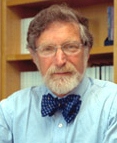
Michael L. Shelanski, MD, PhD, Co-Director
Professor of Pathology & Cell Biology
Henry Taub Professor of Alzheimer's Disease Research
Co-Director, Taub Institute for Research on Alzheimer's Disease and the Aging Brain
Email: mls7@columbia.edu
Tel: (212) 305-3300
Fax: (212) 305-5498
Dr. Shelanski, a neuropathologist and cell biologist is a pioneer in identifying the major structural elements of the nerve cell and has devoted over 40 years to research on the alterations in nerve cell structure and function in Alzheimer’s Disease and related dementias. His laboratory has trained a number outstanding researchers in Alzheimer’s Disease who now lead units at Harvard, Penn and other leading universities. He is the author of over 200 hundred publications in the area of nerve cell biology and cytoskeletal function.
Dr. Shelanski has served as Director of the Medical Scientist Training Programs at both NYU and Columbia. He has been a member of review and advisory groups at the National Institutes of Health, the American Cancer Society and a number of private grant makers as well as a member of Scientific Advisory Board and National Board of Directors of the Alzheimer's Association. He is the recipient of the 2013 Distinguished Service Award from the University of Chicago Medical School, is a member of the American Association of Physicians and of the Institute of Medicine of the National Academy of Sciences. He serves as President of the Scientific Advisory Board of L'Institut du Cerveau et de la Moelle Épinere in Paris.

Contact Us
630 West 168th Street
P&S Box 16
New York, NY 10032
Phone: 212 305-1818
Fax: 212 342-2849
Email: taubinstitute@columbia.edu
Brain Donation
Our ability to understand Alzheimer's disease is dependent upon studying brain tissue.
For more information, please contact Donovan Laing at (212) 305-9086 dal2190@cumc.columbia.edu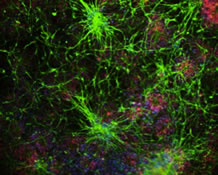
This website uses cookies as well as similar tools and technologies to understand visitors' experiences. By continuing to use this website, you consent to Columbia University's usage of cookies and similar technologies, in accordance with the Columbia University Website Cookie Notice.