Translational Research in Orthopaedics (TRIO)
Postdoctoral Research Scholar Program (Six-Year Residency)
Columbia University has a distinctive place in the history of U.S. higher education and has generated the most Nobel laureates in the world. Historically, Columbia University was the first medical school in the country to confer a medical degree. Columbia University's Department of Orthopaedic Surgery, founded in 1866 as the New York Orthopaedic Hospital has a long and distinguished record of innovations and advancements in the orthopaedic field. Columbia Orthopaedics introduced the first bone bank, electromagnetic field therapy for bone healing, and a series of shoulder prostheses.
Biomedical research has been adopting more sophisticated concepts and technologies. The National Institutes of Health has shifted research direction, placing a heavy emphasis on translational research. Translational research is a unique way of linking basic science and patient care. Successful translational research evolves into transformational research. A good example is the discovery in the 1960's of bone morphogenetic proteins (BMPs) by Marshall R. Urist, an orthopaedic surgeon scientist. BMPs are transforming current orthopaedic practice.
Our department is one of less than a dozen residency programs with a National Institutes of Health (NIH) and Department of Defense (DOD) funded orthopaedic surgeon scientist. Our research culture is very distinct in that orthopaedic surgeons can develop highly competitive and innovative research projects which directly address challenging orthopaedic issues. To this end, we are thrilled to introduce the Translational Research in Orthopaedics (TRIO) Postdoctoral Research Scholar Program at the Center for Orthopaedic research. Our residency program offers a 6-year research residency track with one year dedicated to research. Upon successful completion of the research program, the successful candidate will enter the 5 year Columbia Orthopaedics residency training program. Our goal is to cultivate the next generation of orthopaedic clinician-scientists. The TRIO Research Scholar program will serve as an incubator for the development of future orthopaedic clinician-scholars.
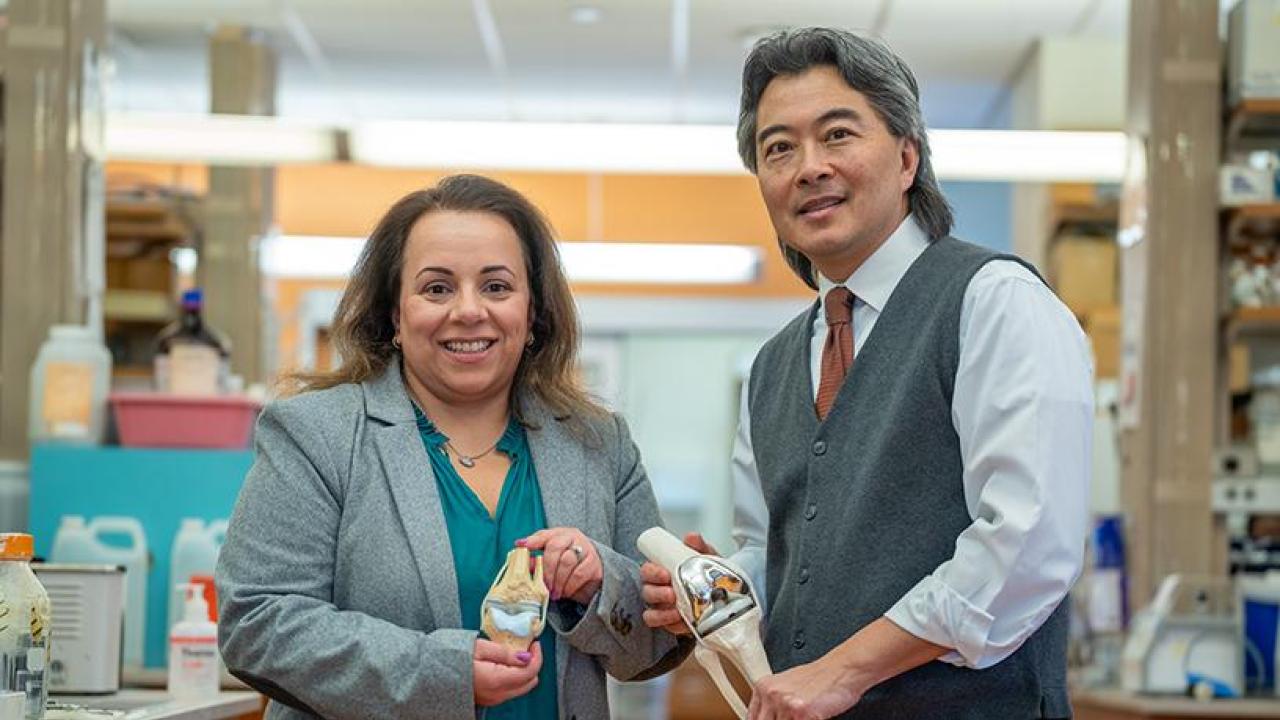
Dr. Francis Y. Lee, Vice Chair for Research, is uniquely positioned to mentor TRIO candidates. He has been instrumental in developing a successful, translational research program. As a tenured Associate Professor of Orthopaedic Surgery, he promotes our clinician scholar program and departmental research activities. Dr. Lee has been the recipient of awards from prestigious foundations; the Orthopaedic Research and Education Foundation (OREF resident, research and career development awards), Aircast Foundation, Musculoskeletal Transplantation Foundation, two NIH R01grants and a Department of Defense grant. He is active in the NIH/OREF/MTF grant peer review processes, AAOS/ORS/OREF Clinician Scholar Development Programs, AAOS/OREF/ORS Grant Writing Workshops, AAOS In-Training Question Writing Committee, American Board of Orthopaedic Surgery, AAOS Research Development Committee and the Orthopaedic Research Society mentoring program.
Our orthopaedic research crosses disciplines and campuses within the university. Dr. Lee and his colleagues offer the TRIO research resident candidates experience, resources and an educational foundation for an orthopaedic clinician-scientist career track. A well-structured educational and research curriculum covers essential aspects of musculoskeletal science and research (Table 1). the TRIO program partners with our TTC program and orthopaedic faculty members. Columbia Orthopaedics' Residency program focuses on graduating preeminent orthopaedic surgeons. The TRIO program is designed to supplement our clinical 6 core competencies in patient care, medical knowledge, interpersonal / communication skills, professionalism, practice-based learning, and system-based learning with research and scholarly experience. We look forward to hosting motivated and ambitious future orthopaedic surgeon scholars, who will have the privilege of conducting translational research before they begin the 5-year orthopaedic training program.
Table 1. NYOH Translational Research in Orthopaedics (TRIO) Program Timeline (Curriculum)
TRIO Programs |
July - Sep |
Oct - Dec |
Jan - Mar |
Apr - Jun |
| Education | ||||
Orthopaedic Basic Science, AAOS, 3rd Ed. Francis Y. Lee, M.D., Ph.D. and Research Staff AAOS Self-Assessment Test |
Chapter 1-6
|
Chapter 7-12 * Thrombosis * Embryology * Bone/Cartilage * Disc/Ligament * Kinesiology |
Chapter 13-18 * Infection * Pharmacology * Fracture Repair |
Chapter 18 -24 * Cartilage Repair * Implant * Cancer * OA/RA * Metabolism |
Orthopaedic Anatomy & Surgical Approach, Hoppenfeld AAOS Self-Assessment Test |
√ |
|||
Bi-Weekly (2nd & 4th) Orthopaedics/Radiology/Pathology Conference (Monday 4:00 pm) |
√ |
√ |
√ |
√ |
Biostatistics |
√ |
√ |
||
Orthopaedic In-Training Examination |
√ |
|||
ORS Grant Writing Workshop |
√ |
|||
| ORS Annual Meeting | √ |
|||
Grand Rounds Fracture Conferences CU Daily Science Seminars |
√ |
√ |
√ |
√ |
Musculoskeletal Pathology & Pathophysiology AAOS Self-Assessment Test |
Bone |
Cartilage Annual New York Musculoskeletal Pathology Review Course |
Soft Tissue |
Arthritis / Infection |
Journal Club |
√ |
√ |
√ |
√ |
Monthly Meet-The-Professor Sessions (NYOH & CU Faculty) |
√ |
√ |
√ |
√ |
| Research | ||||
Compliance Training (IACUC / IRB / HIPAA / CU Animal & Lab Compliance Courses) |
√ |
|||
Histology / Immunohistochemistry |
√ |
√ |
||
Small / Large Animal Surgery |
√ |
√ |
√ |
|
X-ray, MRI & Optical Imaging |
√ |
√ |
√ |
|
Cell Work, RNA, Proteins |
√ |
√ |
√ |
|
OREF Resident Research Grant |
√ |
|||
Weekly Lab Meeting |
√ |
√ |
√ |
√ |
Biomechanical Testing |
√ |
√ |
||
Presentation & Manuscripts |
√ |