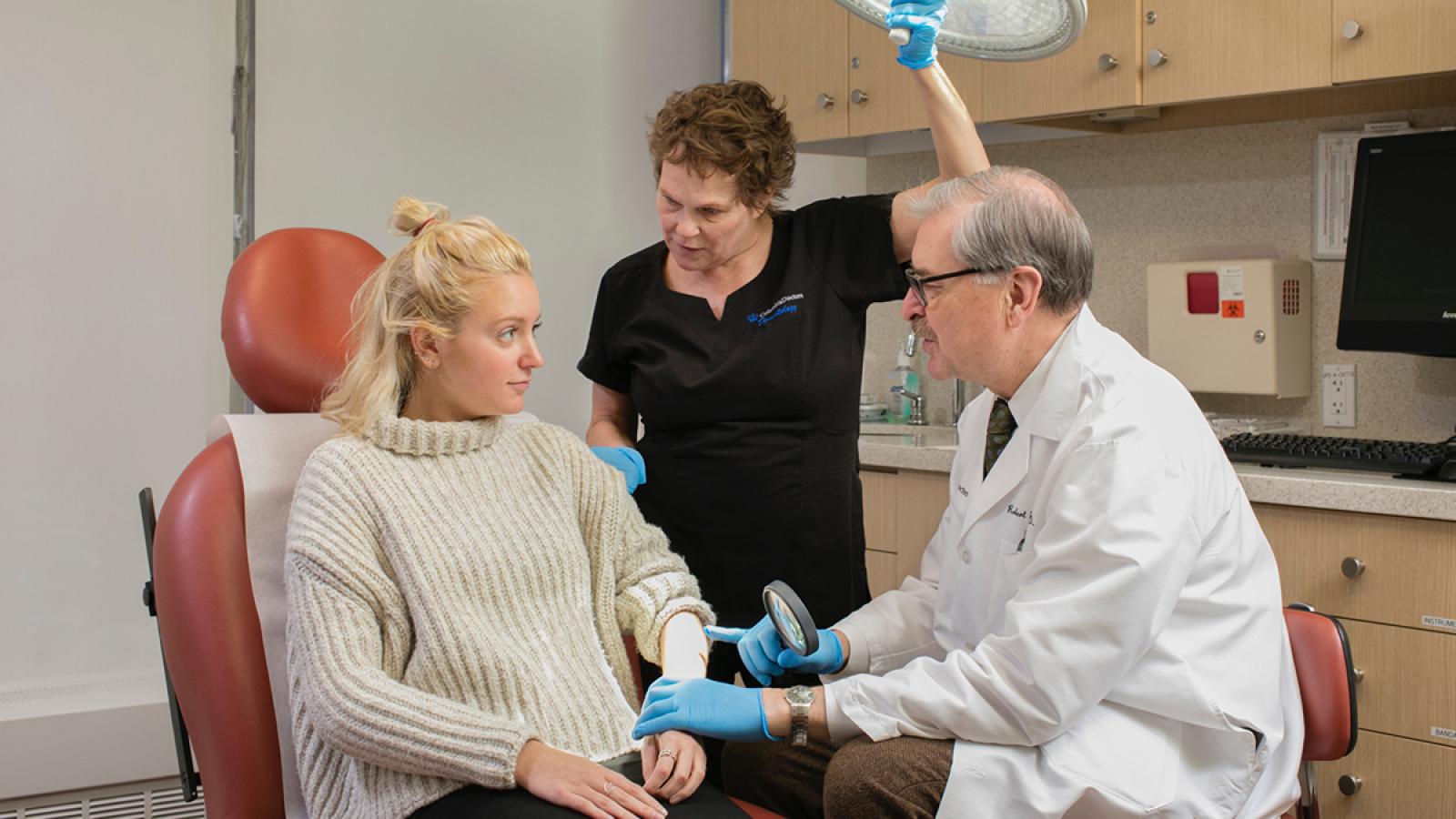
Chemical PeelConsiderations Before Having a Chemical Peel It is very important to find a physician who has adequate training and experience in skin resurfacing. In some states, a medical degree is not required to perform a chemical peel - even the strongest phenol peels - and many states have laws that permit non-physicians to administer certain peel solutions but regulate the strengths which they are permitted to apply. What is a chemical peel?Chemical peeling uses a chemical solution to improve the skin's appearance. It can reduce or eliminate fine lines under the eyes and around the mouth, correct uneven skin pigmentation, remove precancerous skin growths, and soften acne or treat scars caused by acne. The procedure can also treat wrinkles caused by sun damage and scarring, as well as skin blemishes common with age and heredity. Chemical peels can be performed on the face, neck, chest, hands, arms, and legs. Possible complications associated with chemical peels:Possible complications associated with chemical peels may include but are not limited to the following:
A chemical peel is most commonly performed for cosmetic reasons to enhance appearance and self-confidence and may be performed in conjunction with a facelift. However, a chemical peel is not a substitute for a facelift and does not prevent or slow the aging process. What substances are used for chemical peels?Phenol, trichloroacetic acid (TCA), and alphahydroxy acids (AHAs) are used for chemical peels. The precise formula used may be adjusted for each patient.
About the procedure:
|