Dr. Megan Sykes Lab Research
Megan Sykes, MD
Director, Columbia Center for Translational Immunology, Columbia University College of Physicians and Surgeons
Director of Research, Transplant Initiative, NewYork-Presbyterian Hospital

This laboratory is engaged in studies of hematopoietic cell transplantation (HCT) directed toward two clinical applications: 1) the treatment of hematologic malignancies; and 2) the induction of specific transplantation tolerance. Toward the first goal, we are attempting to understand the basis for our observation that, under certain circumstances, graft-vs-host (GVH) alloresponses can remain within the lymphohematopoietic system where they mediate graft-vs-leukemia (GVL) responses, without migrating to the parenchymal GVH target tissues and causing GVHD. We are investigating the basis of this restricted T cell trafficking behavior in mouse models and are analyzing clinical material from a clinical bone marrow transplantation trial that is based on this approach to separating GVL from GVHD. Based on results of one of these trials, we hypothesized that rejection of donor marrow in recipients prepared with less toxic, non-myeloablative regimens, might lead to anti-tumor responses. We have demonstrated in the mouse model that this is indeed the case, and that this effect is associated with the generation of tumor-specific cytotoxic responses. Studies are ongoing to understand the complex pathway, involving the indirect alloresponse, that leads to this phenomenon, which provides a means of achieving anti-tumor responses without the risk of GVHD. A clinical trial of this approach will be conducted and we will address the above hypothesis on human samples.
Toward the second goal, we have focused on the development of non-toxic, non-myeloablative conditioning regimens using mAbs or costimulatory blockade, to eliminate host resistance to engraftment of allogeneic and xenogeneic hematopoietic cells and allow creation of a mixed chimeric state, and hence the induction of specific transplantation tolerance. The use of such approaches obviates the need for risky chronic immunosuppressive therapy. We have achieved kidney allograft tolerance in patients using this approach. These are the first successful attempts at tolerance induction in patients. The laboratory is investigating the role of regulatory T cells and particularly of kidney graft-infiltrating cells in the tolerance achieved in these patients.
We are attempting to understand the mechanisms of peripheral tolerance of CD4 and CD8 T cells that encounter donor antigens on allogeneic hematopoietic cells in the presence of costimulatory blockade. We have obtained evidence for different mechanisms and complex cellular interactions leading to specific early deletion of peripheral donor-reactive CD4 and CD8 T cells. Anergy precedes the death of peripheral donor-reactive T cells, and studies are in progress to understand these phenomena in more detail. We have found that this approach to tolerance induction can also reverse autoimmunity in a type I diabetes model while inducing tolerance to donor islet grafts, and we are investigating the mechanisms of these phenomena.
The induction of tolerance to xenogeneic donors could overcome the organ shortage that currently limits the field of solid organ and islet transplantation. We have developed a method of inducing tolerance that involves replacing the recipient mouse thymus with a xenogeneic pig thymus. Host T cells develop normally in these grafts. These cells are specifically tolerant of pig tissue, and yet mount host MHC-restricted immune responses, despite being positively selected only by porcine MHC. However, studies are underway to understand the basis of abnormalities in the function of regulatory cells developing in xenogeneic thymus tissue. Porcine thymic tissue generates human T cells in immunodeficient mice, and these T cells are also specifically tolerant of the porcine donor. We are performing detailed studies in this "humanized mouse" model to understand the impact of positive selection on a xenogeneic thymic epithelium on the homeostasis, MHC restriction and regulatory function of human T cells in the periphery. We have recently adapted the humanized mouse model to the use of adult bone marrow volunteer donors, allowing the individualized analysis of immunoregulatory abnormalities associated with Type 1 diabetes and other disorders.
We have recently shown that mixed hematopoietic chimerism can be used to induce tolerance among natural antibody-producing B cells that produce anti-a1,3 Gal and other natural antibodies that are of critical importance in xenotransplantation. We are currently performing studies to determine the mechanism by which pre-existing and newly formed anti-a1,3 Gal-producing B cells are tolerized in mixed chimeras. We are using our humanized mouse model to develop strategies for overcoming the antibody barrier to mixed chimerism and tolerance induction in a human immune system.
We have initiated a pre-clinical large animal program in which to bring strategies for tolerance induction closer to clonal application.
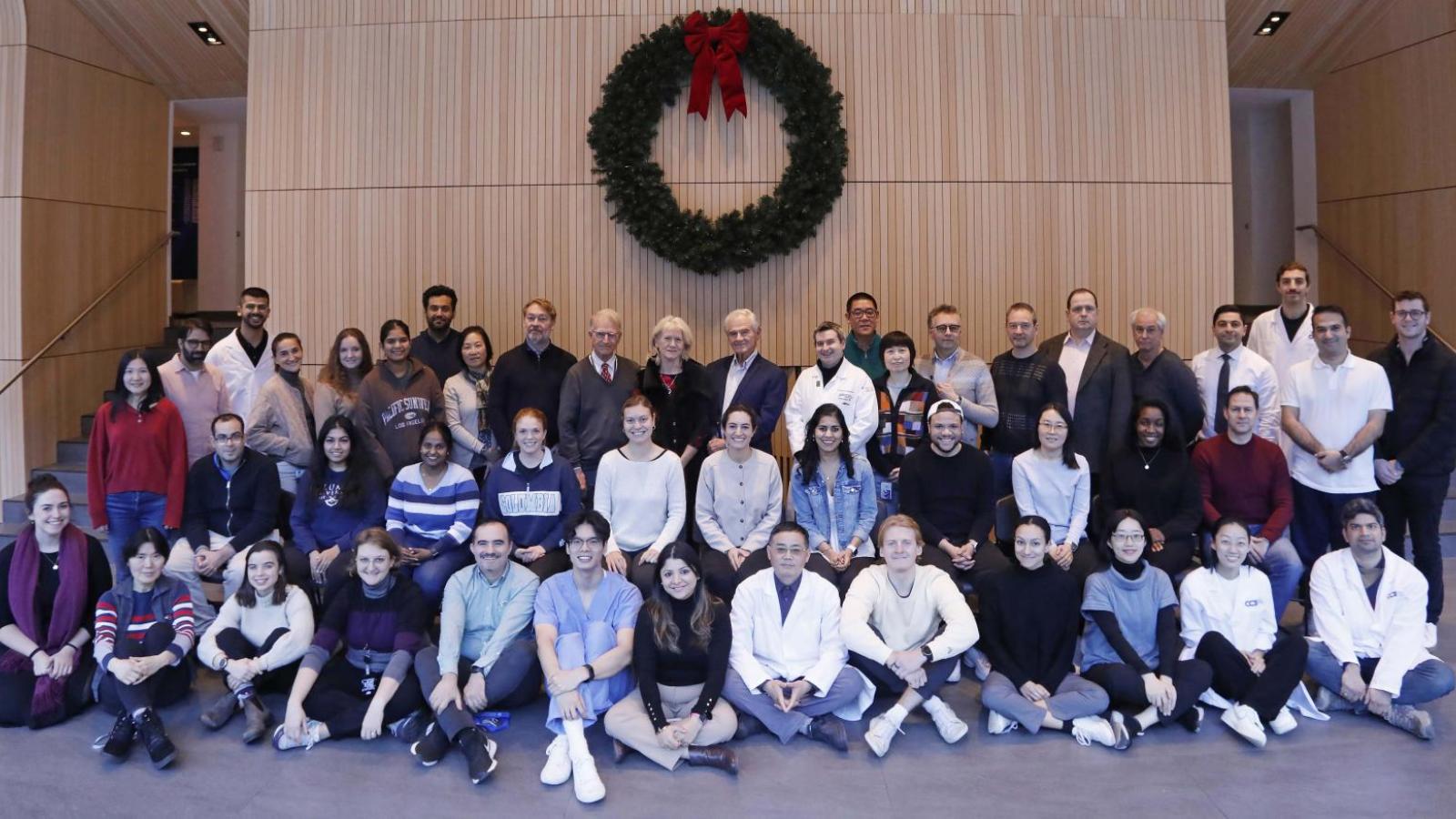
Lab members:
Anette Wu, MD, MPH
Brittany Shonts
Julien Zuber MD, PhD
Guiling Zhao
HaoWei Li, MD, PhD
Hiroyuki Tahara, MD, PhD
Hugo Sondermeijer, MD
Paresh Viswashrao
Markus Hozl, PhD
Chiara Borsotti, PhD
Heather Morris, MD
David Woodland, MD
Nichole Danzl, PhD
Yojiro Kato, MD
Selected Publications:
1. Zhao Y, Swenson K, Sergio JJ, Arn JS, Sachs DH, Sykes M. Skin graft tolerance across a discordant xenogeneic barrier. Nat. Med. 1996:2(11):1211-1216.
2. Wekerle T, Kurtz J, Ito H, Ronquillo JV, Dong V, Zhao G, Shaffer JM, Sayegh MH, Sykes M. Allogeneic bone marrow transplantation with costimulatory blockade induces macrochimerism and tolerance without cytoreductive host treatment. Nat. Med. 2000;6:464-469.
3. Nikolic B, Takeuchi Y, Leykin I, Smith RN, Sykes M. Mixed hematopoietic chimerism allows cure of autoimmune diabetes through allogeneic tolerance and reversal of autoimmunity. Diabetes 2004;53(2)376-383.
4. Sykes M, Nikolic B. Treatment of severe autoimmune disease by stem-cell transplantation. Nature 2005;435:620-627.
5. Chakraverty R, Cote D, Buchli J, Cotter P, Hsu R, Zhao G, Sachs T, Pitsilldes C, Bronson R, Means T, Lin C, Sykes M. An inflammatory checkpoint regulates recruitment of graft-versus-host reactive T cells to peripheral tissues. J. Exp. Med. 2006;203(8):2021-2031.
6. Yang Y and Sykes M. Xenotransplantation - Current status and a perspective on the future. Nat. Rev. Immunol. 2007; 7(7):519-531.
7. Kawai T, Cosimi AB, Spitzer TR, Tolkoff-Rubin N, Suthanthiran M, Saidman S, Shaffer J, Preffer F, Ding R, Sharma V, Fishman J, Dey BR, Ko D, Hertl M, Goes N, Wong W, Williams W, Colvin RB, Sykes M, and Sachs DH. HLA-mismatched renal transplantation without maintenance immunosupression. New Engl. J. Med. 2008; 358(4): 353-361. PMCID: 18216355.
8. Gibbons C and Sykes M. Manipulating the immune system for anti-tumor responses and transplant tolerance via mixed chimerism. Immunol. Rev. 2008; 223: 334-360. PMCID: 2680695.
9. Andreola G, Chittenden M, Shaffer J, Cosimi A.B, Kawai T, Cotter P, LoCascio SA, Morokata T, Dey BR, Tolkoff-Rubin NT, Preffer F, Bonnefoix T, Kattleman K, Spitzer TR, Sachs DH, Sykes M. Mechanisms of Donor-Specific Tolerance in Recipients of Haploidentical Combined Bone Marrow/Kidney Transplantation. Am J Transplant. 2011 Jun;11(6):1236-1247. doi: 10.1111/j.1600-6143.2011.03566 PMID: 21645255.
10. Lucas C, Workman CJ, Beyaz S, LoCascio S, Zhao G, Vignali DAA, Sykes M. LAG-3, TGF-β, and cell-intrinsic PD-1 inhibitory pathways contribute to CD8 but not CD4 T-cell tolerance induced by allogeneic BMT with anti-CD40L. Blood. 2011 May 19;117(20):5532-40 PMID: 21422469.